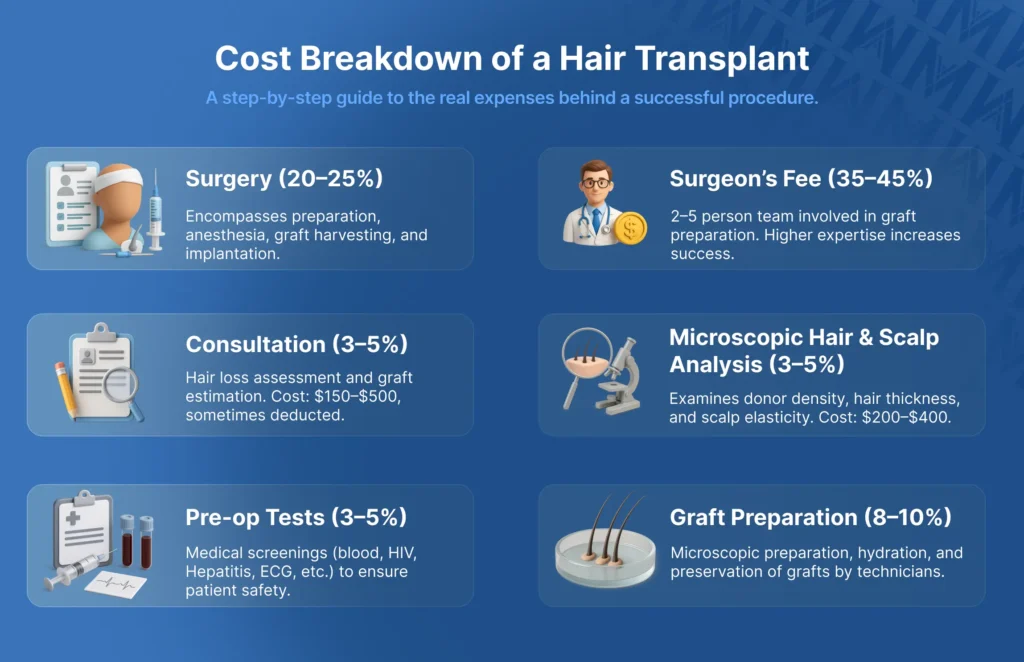

Hair transplant cost creates confusion for one simple reason: clinics advertise numbers, not explanations. One clinic quotes a low price. Another gives a much higher estimate. Patients then assume someone is overcharging—or worse, hiding something.
The truth sits in between.
A hair transplant surgery involves medical skill, time, planning, and resources. Cost reflects what happens before, during, and after the procedure—not just the number of grafts. This article explains what you really pay for, why prices vary, and how to judge value instead of chasing the cheapest deal.
Why Hair Transplant Prices Vary So Much
Hair transplant pricing does not follow a single global rule. Clinics calculate cost based on multiple medical and operational factors.
Key influences include:
-
Surgeon expertise
-
Number of grafts required
-
Technique used
-
Clinic standards
-
Location
When clinics hide these details, patients feel confused. When they explain them clearly, pricing makes sense.
Trusted sources:
International Society of Hair Restoration Surgery (ISHRS)
American Academy of Dermatology (AAD)
The Biggest Cost Factor: Number of Grafts
Most hair transplant clinics price surgery based on graft count.
A graft contains:
-
1 to 4 hair follicles
-
Living tissue that requires careful handling
More grafts mean:
-
Longer surgery time
-
Higher technical demand
-
More medical staff involvement
A small procedure costs less. A full hairline and crown restoration costs more. Simple math, real biology.
Technique Used: FUE vs FUT
The surgical method affects cost.
FUE (Follicular Unit Extraction)
-
Individual graft extraction
-
Minimal visible scarring
-
Requires high precision and time
FUE usually costs more because it demands greater technical skill and longer operating hours.
FUT (Strip Method)
-
Donor strip removal
-
Higher graft yield in one session
-
Linear scar remains
FUT may cost less per graft but suits fewer patients today.
Source: ISHRS Surgical Technique Guidelines
Surgeon Experience: Skill Has a Price
You do not pay only for surgery—you pay for judgment.
Experienced surgeons:
-
Design natural hairlines
-
Protect donor area
-
Avoid overharvesting
-
Reduce long-term correction costs
Inexperienced work may look cheaper now but often costs more later through repairs or dissatisfaction.
This reality applies worldwide, including hair transplant Lahore clinics.
Clinic Infrastructure and Medical Standards
A professional hair transplant clinic invests in:
-
Sterilized operating rooms
-
Trained surgical teams
-
Medical-grade equipment
-
Emergency preparedness
Low-cost clinics often cut expenses by:
-
Using untrained technicians
-
Ignoring hygiene protocols
-
Rushing procedures
Lower price does not always mean better value.
Source: Journal of Cutaneous and Aesthetic Surgery
Pre-Surgery Evaluation Costs (Often Ignored)
Proper clinics include:
-
Scalp assessment
-
Donor area analysis
-
Hair loss pattern evaluation
These steps guide long-term planning. Clinics that skip evaluation may offer cheaper quotes but increase failure risk.
Good planning saves money long-term—even if upfront cost feels higher.
Post-Surgery Care: Included or Extra?
Hair transplant cost should cover more than the operation.
Check whether pricing includes:
-
Medications
-
Follow-up visits
-
Aftercare instructions
-
Emergency support
Some clinics advertise low surgery fees but charge separately later. Transparent clinics explain everything upfront.
Does Location Affect Hair Transplant Cost?
Yes—but not always how people assume.
Countries with lower operational costs often offer lower prices. This explains why patients explore options like hair transplant Lahore or other medical tourism destinations.
However, location does not replace skill. A well-equipped clinic in Lahore may outperform a poorly regulated center elsewhere.
Cost makes sense only when combined with quality.
Cheap Hair Transplants: Where the Risk Hides
Extremely low prices usually indicate:
-
Overharvesting
-
Poor graft survival
-
Unqualified staff
-
High infection risk
Repair procedures cost more than doing it right the first time.
ISHRS reports show a rise in corrective surgeries due to poorly performed low-cost transplants.
Long-Term Cost Logic: One-Time vs Repeated Spending
Hair transplant surgery usually requires one major session. PRP and medications require ongoing spending.
Smart patients evaluate:
-
Total lifetime cost
-
Durability of results
-
Need for future corrections
Upfront savings disappear if results fail early.
Is Hair Transplant Covered by Insurance?
In most cases, no.
Insurance classifies hair transplant surgery as cosmetic. Exceptions remain rare and usually involve trauma or burns.
Patients should plan accordingly and avoid financing traps with unclear terms.
How to Judge Value Instead of Price
A fair hair transplant cost offers:
-
Honest consultation
-
Realistic graft planning
-
Skilled surgical execution
-
Long-term donor preservation
Red flags include:
-
Guaranteed density claims
-
“Limited-time discount” pressure
-
No surgeon involvement
Medicine does not run on flash sales.
Questions to Ask Any Hair Transplant Clinic
Before agreeing on cost, ask:
-
Who performs graft extraction and placement?
-
How many surgeries does the surgeon perform yearly?
-
What happens if growth falls below expectations?
-
Are follow-ups included?
Clear answers reflect ethical practice.
Final Thoughts: What You Really Pay For
A hair transplant cost covers far more than hair. It pays for:
-
Medical expertise
-
Time and precision
-
Safety and planning
-
Long-term confidence
Chasing the cheapest option often leads to disappointment. Understanding value leads to better results—and fewer regrets.
Good clinics explain costs clearly. Educated patients choose wisely. Google rewards transparency, and so does real life.
Trusted Medical References
-
International Society of Hair Restoration Surgery (ishrs.org)
-
American Academy of Dermatology (aad.org)
-
Dot Clinics
-
Journal of Cutaneous and Aesthetic Surgery