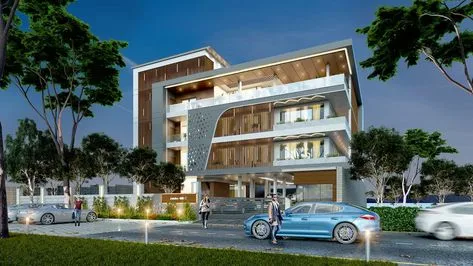

In today’s fast-paced architectural industry, visuals play a critical role in communicating design ideas. Traditional sketches and 2D plans often fail to convey the depth, texture, and real-life feel of a project. This is where 3D exterior rendering services come into play. These services provide architects, designers, and homeowners with photorealistic images of buildings, landscapes, and urban designs before construction begins. The use of 3D rendering transforms architectural designs into visually immersive experiences that are easy to understand and evaluate.
What Are 3D Exterior Rendering Services?
3D exterior rendering services involve creating detailed, realistic images of a building’s exterior using advanced software and digital modeling techniques. Unlike basic drawings, 3D renderings show accurate perspectives, lighting effects, materials, and textures. Architects can showcase their designs in a way that clients and stakeholders can instantly visualize. These renderings are not just images; they are a bridge between conceptual ideas and real-world execution.
The Role of 3D Rendering in Architecture
The architecture industry has always relied on clear communication between designers, clients, and contractors. Misunderstandings can lead to delays, extra costs, and design changes. With 3D exterior rendering, these issues are greatly reduced. By visualizing a project from all angles, architects can identify potential problems and make adjustments before construction starts. Clients can also provide feedback early in the design process, ensuring that the final result meets their expectations.
How 3D Exterior Renderings Improve Design Accuracy
Accuracy is one of the biggest advantages of 3D exterior renderings. These services allow designers to experiment with different materials, colors, and lighting conditions. For instance, they can test how sunlight affects the façade at different times of the day or how landscaping integrates with the building structure. This level of precision helps architects avoid costly mistakes and ensures that the final construction matches the original vision.
Benefits for Clients and Stakeholders
Clients often struggle to understand traditional architectural plans and sketches. A 3D exterior rendering provides them with a clear and realistic view of the project. They can see exactly how the building will look, including textures, shadows, and surrounding environments. This clarity builds trust between architects and clients. Stakeholders, such as investors or municipal authorities, also benefit from these visualizations, as they can make informed decisions based on realistic images rather than abstract plans.
Enhancing Marketing and Presentation
Apart from improving design accuracy, 3D exterior rendering services are powerful tools for marketing and presentation. Real estate developers, construction companies, and architects can use photorealistic renderings in brochures, websites, and social media campaigns. These images create a strong visual impact, attracting potential buyers or clients. A well-rendered exterior view can convey the quality, style, and vision of a project more effectively than words alone.
Different Types of 3D Exterior Renderings
There are several types of 3D exterior renderings that architects and designers use. Photorealistic renderings aim to replicate real-life images with detailed textures, accurate lighting, and shadows. Conceptual renderings focus on showing the design idea clearly without excessive detail, which is useful in the early design phase. Interactive 3D renderings allow clients to explore the building from multiple angles, providing an immersive experience that static images cannot match. These options give designers flexibility in presenting their work according to the project stage and audience needs.
How Technology Drives 3D Exterior Rendering
The advancement of computer technology and software has made 3D exterior rendering services more accessible and affordable. Tools like AutoCAD, SketchUp, 3ds Max, and Lumion allow designers to create highly detailed models with realistic textures, reflections, and lighting. Cloud-based rendering services have also reduced processing time, enabling architects to deliver high-quality visuals quickly. As technology continues to improve, the quality and realism of exterior renderings are becoming nearly indistinguishable from actual photographs.
Challenges in 3D Exterior Rendering
While 3D exterior rendering offers many advantages, it is not without challenges. Creating high-quality renderings requires technical skills, artistic ability, and attention to detail. Designers must understand architectural principles, material properties, and lighting physics to produce realistic images. Additionally, rendering complex scenes can be time-consuming and require powerful hardware. However, the benefits often outweigh the challenges, as the investment in quality renderings leads to better design outcomes and client satisfaction.
The Future of 3D Exterior Rendering
The future of architectural visualization is closely tied to 3D exterior rendering. As virtual reality (VR) and augmented reality (AR) technologies advance, clients may soon experience designs in fully immersive environments. Architects can present their projects in VR, allowing clients to “walk” around the building before construction begins. This evolution will further enhance communication, reduce errors, and increase engagement with design projects. 3D exterior rendering is no longer just a tool; it is an essential part of modern architectural workflows.
Conclusion
3D exterior rendering services have revolutionized the way architects and designers communicate their ideas. By providing realistic, detailed, and immersive visualizations, these services bridge the gap between imagination and reality. Clients, stakeholders, and designers all benefit from improved clarity, accuracy, and engagement. As technology continues to evolve, 3D renderings will become even more sophisticated, offering new possibilities for design visualization and project presentation. For anyone involved in architecture or real estate, investing in professional 3D exterior rendering services is no longer optional but essential for success.