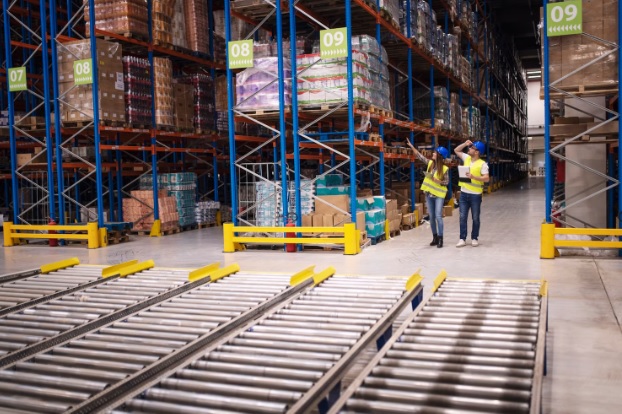

The ever-growing scale of supply chains, rising consumer expectations, and increasing operational complexity have accelerated the move of the industry toward advanced warehouse automation solutions. This puts modern warehouses under immense pressure to achieve higher speeds, accuracy, and flexibility. Traditional manual processes do fall short on these aspects, usually at bottlenecks such as picking, storage, material movement, and returns handling. Automation, in the form of robotics with intelligent software support, is revolutionizing the way in which warehouses operate and changing the future face of fulfillment.
Thus, the adoption of warehouse automation solutions increased exponentially when companies started looking for various ways to optimize workflows and attain cost efficiency. Besides this, increased SKU volumes, labor shortages, and demand for real-time visibility are other problems that automation ensures the consistency and precision required to remain competitive. Robotic warehousing reinforces operations by allowing continuous, predictable, and safe workflows.
Trends forming warehouse automation.
The digitization of warehouses and the adoption of robotics in industries is taking place at a growing rate. Integration of advanced software, robotics, machine vision, and data intelligence into the ecosystem of warehouses comprises the other major trends.
Growth of Robotic Warehousing
Automatic warehousing is a fast-growth area that involves autonomous systems taking on key tasks such as picking, sorting, replenishment, and material transport. These robots conduct their operations with high accuracy while reducing human dependence, hence increasing productivity for the entire process.
AI and Data-Driven Warehouse Operations
With artificial intelligence, better decisions are taken based on the analysis of real-time data generated across the warehouse. It makes for greater slotting, predictive maintenance, inventory optimization, and workload balancing.
Rise of Modular and Scalable Automation
Companies are turning to modular automation systems where additional modules can be added when needed. Indeed, this trend is claimed to support flexible warehouse configurations and easier transitions during seasonal peaks.
Safety and Ergonomics-Greater Emphasis
Automation minimizes workplace hazards by limiting manual lifting, repetitive movements, and forklift operations. This leads to a much safer environment in warehouses and reduces the possibility of injury to a great extent.
Types of Warehouse Automation Solutions
There are several automation technologies in a modern warehouse, each employed where necessary.
Automatic Storage and Retrieval Systems
The solutions of AS RS optimize space utilization by moving pallets or totes in and out with ultra-high-density storage.
Mobile Autonomous Robots
AMRs move goods, assist in picking, and help in the development of effective linkages between storage and fulfillment zones.
Automated Sorting Systems
The systems speed up order consolidation through increased accuracy and reduced manual effort.
Conveyor and Shuttle-Based Solutions
Conveyors and shuttle systems unblock the continuous flow of products while offering efficiency in high-throughput environments.
Software ecosystems of the warehouse
Most of the software platforms orchestrate automation by tracking inventory, managing tasks, and integrating data throughout warehouse operations.
The Role of Addverb in Advanced Automation
Addverb is one of the world’s leading warehouse automation solutions providers, offering a comprehensive portfolio ranging from robotics and intelligent storage systems to automation software. The company designs and manufactures hardware and software in-house to ensure reliable performance and seamless interoperability. Addverb facilitates various warehouse functions like sorting, picking, material movement, inventory scanning, and reverse logistics. Their technologies can also be integrated into new and existing facilities that help organizations enhance accuracy, efficiency, and operational safety. With global operations and industry-wide experience, Addverb continues to advance the capabilities of robotic warehousing.
Best Practices for Warehouse Automation
- Assess Operational Needs Fully: First, warehouses have to chart the current workflows and recognize inefficiencies. In this regard, the clear recognition of needs is bound to ensure the correct selection of automation technologies.
- Prioritise Scalable and Flexible Solutions: Implementing modular systems allows businesses to adjust their automation levels as demands grow.
- Integrate Robotics and Software Early: Robotic warehousing performs best when integrated with software systems that coordinate tasks and provide real-time visibility.
- Invest in Training and Change Management: Training ensures teams understand new workflows and adapt smoothly to automated environments.
- Monitor Performance Continuously: Tracking KPIs such as picking accuracy, fulfilment time, and storage utilisation helps optimise automation over time.
Conclusion
Warehouse automation solutions are becoming essential for businesses aiming to improve accuracy, speed, and resilience across warehouse logistics. From robotic warehousing to advanced storage and sorting technologies, automation equips organisations with the tools needed to meet growing operational demands. Companies like Addverb strengthen this transformation by providing integrated robotics and software systems that enhance material movement, picking, storage, and reverse logistics. As automation continues to evolve, warehouses that adopt intelligent technologies will gain stronger operational control, reduced costs, and long-term supply chain competitiveness.